National Volunteer Week: How Service Strengthens Communities
National Volunteer Week highlights how community service delivers evidence-based mental health benefits including reduced depression symptoms, enhanced psychological well-being, and stronger social connections that serve as protective factors against isolation and loneliness.
Feeling disconnected from your community in an increasingly divided world? National Volunteer Week offers a powerful reminder that meaningful connection and renewed purpose are just a service opportunity away, bringing research-backed mental health benefits that extend far beyond helping others.
In this Article
Strengthening Community Bonds Through Service and Empathy
For many people today, the state of the world can feel overwhelming. Political divisions deepen, social media creates echo chambers while amplifying conflict, and the COVID-19 pandemic revealed just how isolated many of us have become. Yet as Fred Rogers wisely reminded us: “Look for the helpers. You will always find people who are helping.”
National Volunteer Week presents a meaningful opportunity to celebrate those who serve their communities and perhaps inspire you to join them. Through recognizing and supporting volunteerism, we can cultivate empathy, forge stronger connections, and rebuild the sense of community that modern life sometimes erodes.
Understanding National Volunteer Week’s roots
President Richard Nixon established National Volunteer Week in 1974 through executive order. Since then, U.S. presidents across the political spectrum have maintained this tradition, dedicating the third week of April to recognizing volunteers and highlighting service projects nationwide.
The Points of Light Foundation and Volunteer Canada—two nonprofit organizations committed to promoting civic engagement—organize and coordinate National Volunteer Week activities. These organizations work to educate the public about volunteer opportunities, encourage broader participation, and enhance the quality and inclusiveness of volunteer initiatives across communities.
Why community connection matters more than ever
Volunteer service takes on particular significance in 2025 as American society navigates profound changes. Technology, shifting cultural values, and the lingering effects of a global pandemic have fundamentally altered how many people experience community and connection.
The human tendency toward “us versus them”
Social psychologists understand that humans evolved to function within group structures—safe circles where early people found protection from external threats. This evolutionary inheritance shapes how we instinctively categorize the world into “us” and “them,” into neighbors we feel responsible toward and strangers we don’t.
In the biblical tradition, when a disciple asked Jesus “Who is our neighbor?” he was essentially asking: “Who deserves my care and concern?” This ancient question remains surprisingly relevant. Depending on cultural context and individual perspective, people draw the boundaries of their moral community differently.
Yet many contemporary thinkers advocate for recognizing our shared humanity—expanding our circle of concern to embrace all people as equally valuable, regardless of background or belief.
How social media reshapes community
Social media platforms introduced new dynamics to age-old questions about community boundaries. Algorithms curate our information feeds, creating digital environments where we primarily encounter people who think like us and validate our existing beliefs. As more social interaction moved online, it became easier to dismiss opposing viewpoints and even attack those we disagree with from behind screens.
Without face-to-face contact—without seeing body language, hearing tone of voice, or recognizing shared humanity in someone’s eyes—misunderstanding and hostility flourish.
COVID-19’s lasting impact on connection
The COVID-19 pandemic intensified existing trends toward isolation as people sheltered at home for safety. Research demonstrates that lockdowns significantly impacted mental health, with particularly pronounced effects on young people whose brains were still developing. Social isolation during this period widened already-growing gaps in how people experience community and belonging.
How volunteering rebuilds what’s been fractured
Volunteer service moves people beyond their individual concerns and connects them to something larger than themselves. Local communities depend on volunteers to function—from food banks to youth programs, environmental initiatives to elder care.
When someone chooses to volunteer, they extend themselves toward others in ways that create new social connections. They work alongside people pursuing a common mission and interact with community members they might never otherwise encounter.
This exposure to people from diverse backgrounds naturally cultivates empathy, helping break down prejudices and humanizing groups we might otherwise view with suspicion or indifference.
The mental health benefits of giving back
Beyond strengthening communities, volunteering offers significant personal benefits. Research consistently demonstrates that volunteer work:
- Enhances psychological well-being
- Provides a greater sense of life purpose
- Reduces symptoms of depression
- Improves overall health
- Fosters feelings of connection with others
- Increases life satisfaction
- Generates pride and personal empowerment
Service as a form of self-care
Social connection functions as a crucial protective factor for mental health, potentially reducing risk for various mental health challenges. Volunteer work simultaneously addresses multiple dimensions of well-being: it offers purpose, builds self-esteem, and creates opportunities for meaningful social bonds.
How service cultivates empathy
Spending time working with and helping diverse communities through various forms of service naturally expands your understanding of others’ perspectives, motivations, and experiences. Volunteering represents prosocial behavior that not only expresses empathy but actively develops and deepens it.
Celebrating National Volunteer Week in your community
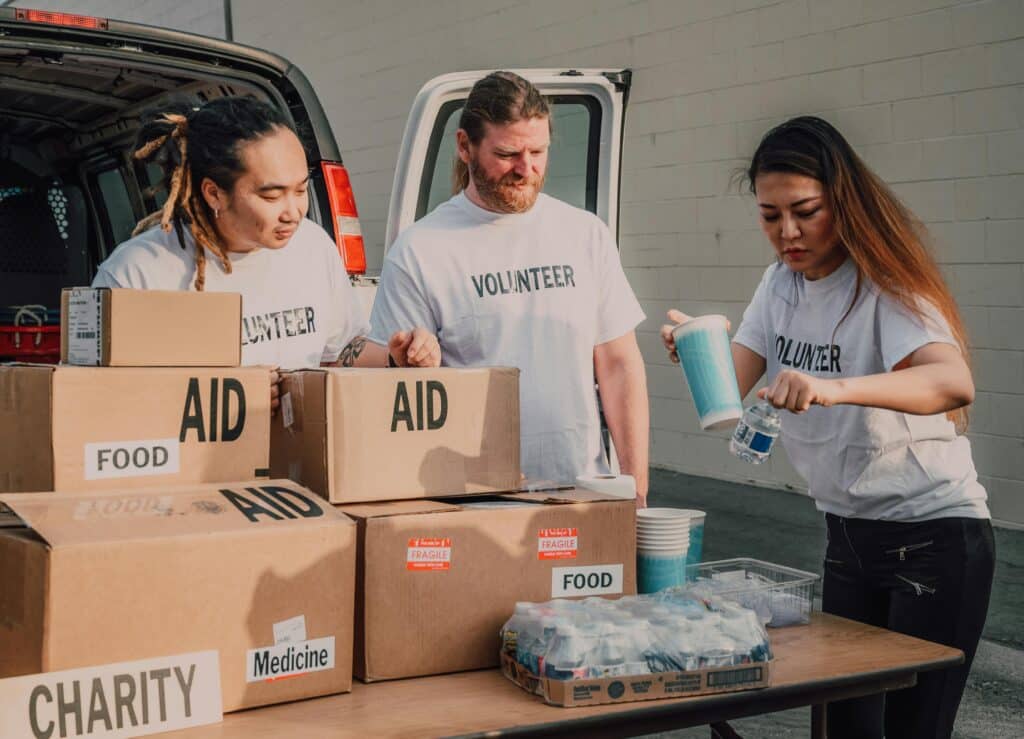
National Volunteer Week serves dual purposes: recognizing existing volunteers whose dedication makes countless programs possible, and inspiring new people to get involved.
For organizations and coordinators
Nonprofit organizations can use this week to launch new initiatives, educate the public about volunteer opportunities, and show appreciation for current volunteers. Consider planning special events to celebrate your volunteers, offering personal thanks, or organizing a full week of recognition activities.
April has expanded into Global Volunteer Month, with events scheduled across the United States and worldwide. Learn more about coordinated efforts through PointsOfLight.org.
Supporting volunteer sustainability
Volunteer burnout poses a real challenge to sustainable civic engagement. Recognition and appreciation help address this problem. Whether or not you’re part of a formal organization, you can:
- Create social media content highlighting volunteers in your area
- Share the mission of a charity organization meaningful to you with your networks
- Personally recognize someone you know who volunteers—perhaps by taking them to lunch or acknowledging their contributions in ways they’d value
- Take the step of becoming a volunteer yourself
Finding volunteer opportunities
One powerful way to honor National Volunteer Week is becoming a volunteer. Organizations always need additional help, and existing volunteers often struggle to meet all the needs they see.
Recent Census Bureau data reveals that the United States is experiencing historically low volunteer participation rates since tracking began in the early 2000s—meaning your contribution matters more than ever.
Start by asking friends and acquaintances about their volunteer involvement. What organizations do they support? What missions resonate with them? You might also explore opportunities through faith communities if you’re part of one.
For National Volunteer Week specifically, visit Points of Light Engage—a comprehensive digital platform featuring thousands of volunteer opportunities, both online and in-person, across the country and around the world.
An invitation to action
In an era marked by isolation, fractured communities, and digital conflict, you can make tangible difference by volunteering time and energy toward causes that matter to you. The benefits extend in multiple directions: volunteering increases social interaction, provides shared purpose, and offers an antidote to loneliness—one of the most widespread challenges in contemporary society.
When additional support helps
If you’re interested in exploring how community connection and service might enhance your mental health and overall well-being, working with a licensed clinical social worker can provide valuable support. Therapy offers tools and strategies that help you take concrete steps toward greater self-awareness, improved self-esteem, clearer sense of purpose, and deeper empathy.
For those with limited time or transportation challenges, telehealth therapy provides a convenient alternative to traditional in-person sessions. Research confirms that telehealth therapy delivers outcomes comparable to face-to-face sessions, allowing you to attend from home on a schedule that works for you.
ReachLink connects clients with licensed clinical social workers through secure video sessions, offering flexible scheduling and eliminating geographical barriers to accessing quality mental health support.
Moving forward together
The constant stream of troubling news can feel mentally and emotionally exhausting. With media cycles demanding attention every moment, negativity often seems inescapable. Yet you can positively impact both your own mental health and your community’s well-being by taking action.
Become the helper that others look for. Be the neighbor that others need. Every person is neighbor to every other person, and we can practice good neighboring by genuinely knowing diverse people and working toward positive change in others’ lives.
Whether you’re seeking ways to combat isolation, searching for greater purpose, or hoping to contribute to healing social divisions, volunteering offers a concrete path forward. This National Volunteer Week—and throughout the year—consider how service might enrich both your life and your community.
For support in developing the self-awareness, emotional skills, and sense of purpose that enable meaningful community engagement, licensed clinical social workers can provide professional guidance tailored to your specific needs and circumstances.
Disclaimer:
The information presented here is educational in nature and not intended to substitute for professional diagnosis, treatment, or advice. For mental health concerns, consult with a qualified licensed clinical social worker or other mental health professional. Any actions you take based on this information are at your own discretion.
FAQ
-
How does volunteering and community service impact mental health?
Volunteering provides numerous mental health benefits including reduced feelings of isolation, increased sense of purpose, and improved self-esteem. Community service activities help build social connections, create meaningful experiences, and can reduce symptoms of depression and anxiety. The act of helping others triggers the release of endorphins and creates a positive feedback loop that enhances overall well-being.
-
Can therapy help someone who feels isolated despite being involved in community activities?
Yes, therapy can be very helpful for people experiencing loneliness even while participating in social activities. Sometimes the issue isn't lack of social contact but difficulty forming deep, meaningful connections. Cognitive Behavioral Therapy (CBT) and interpersonal therapy can help identify barriers to connection, address negative thought patterns, and develop better social skills and communication strategies.
-
What therapeutic approaches help build empathy and social connection skills?
Several therapeutic approaches effectively develop empathy and social connection skills. Dialectical Behavior Therapy (DBT) teaches interpersonal effectiveness and emotional regulation. Group therapy provides a safe space to practice social skills with peer support. Mindfulness-based therapies help increase awareness of others' experiences, while family therapy can improve communication patterns and emotional understanding within relationships.
-
How can someone overcome social anxiety to participate in volunteer activities?
Overcoming social anxiety for volunteering often involves gradual exposure therapy and cognitive restructuring. Start with low-pressure volunteer opportunities that align with your interests and skills. Therapy can help challenge anxious thoughts, develop coping strategies, and build confidence through role-playing and behavioral techniques. Many people find that focusing on helping others naturally reduces self-consciousness and anxiety.
-
When should someone consider therapy for social isolation or community engagement struggles?
Consider therapy if isolation significantly impacts your daily functioning, relationships, or overall well-being. Signs include persistent loneliness despite social opportunities, avoiding community activities due to fear or anxiety, difficulty maintaining relationships, or feeling disconnected even in group settings. A licensed therapist can help identify underlying causes and develop personalized strategies for building meaningful connections.
