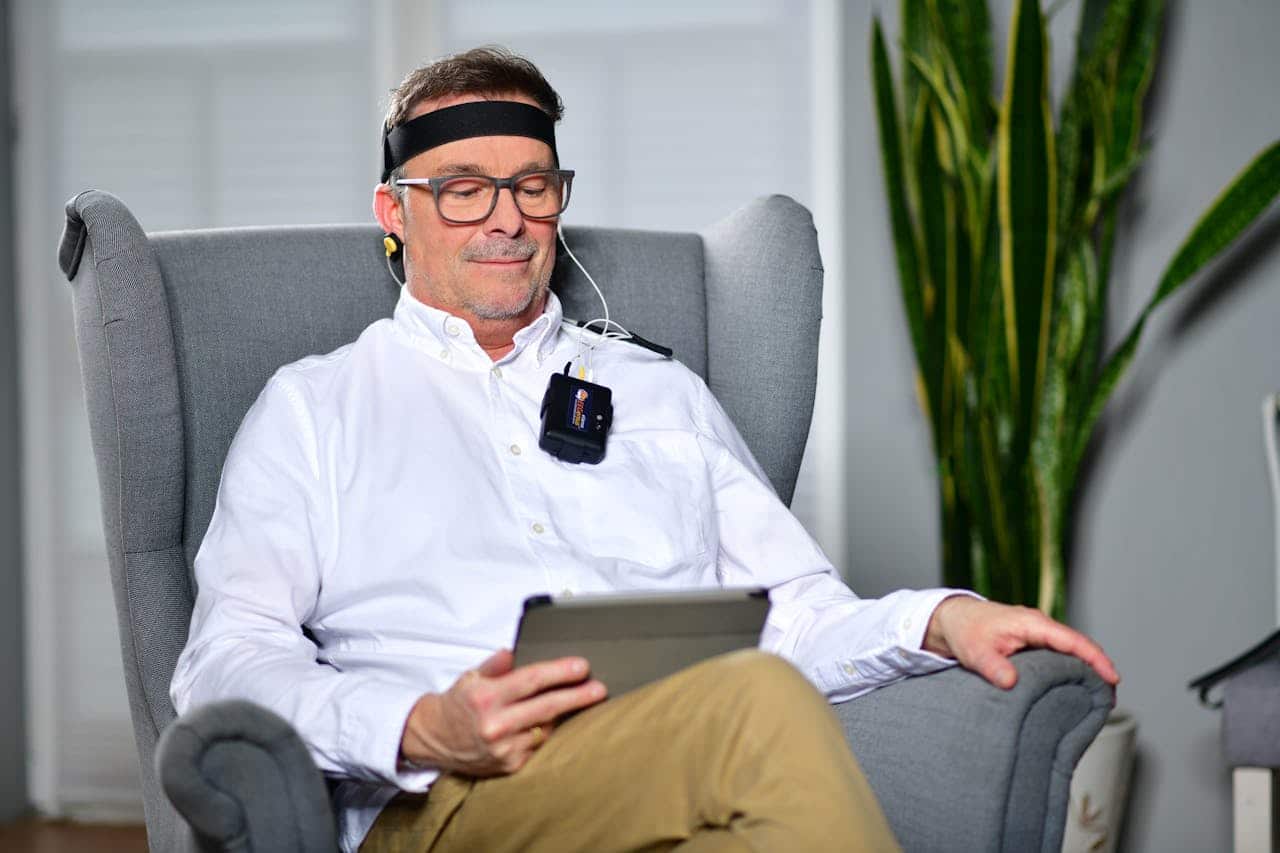
Neurofeedback therapy uses real-time brain activity feedback to train self-regulation, showing strongest research evidence for ADHD and epilepsy, with costs ranging $3,000-8,000 for complete treatment when combined with professional therapeutic support.
Can training your brain to regulate itself really help with ADHD, anxiety, or trauma recovery? Neurofeedback therapy promises to teach your brain healthier patterns through real-time feedback, but the evidence varies dramatically by condition. Here's what actually works, what it costs, and how to avoid costly mistakes.
What is neurofeedback therapy?
Neurofeedback therapy is a type of biofeedback that trains your brain to regulate its own activity. During a session, sensors placed on your scalp measure your brainwave patterns in real time, displaying this information on a screen through visual or auditory feedback. When your brain produces desired patterns, you receive positive feedback like a tone, a moving image, or points in a game. Over repeated sessions, your brain learns to reproduce these healthier patterns on its own.
You might also hear neurofeedback called EEG biofeedback or neurotherapy. All three terms describe the same process: using electroencephalography (EEG) to monitor brain activity and provide immediate feedback that helps you learn self-regulation. Think of it like looking in a mirror while learning a new physical skill. The mirror doesn’t do the work for you, but it shows you what’s happening so you can make adjustments.
Researchers first developed neurofeedback in the 1960s and 1970s when scientists discovered they could train animals to alter their brainwave activity. The technique gained clinical traction in the 1990s as technology improved and practitioners began using it for conditions like ADHD and epilepsy. Today, clinicians use neurofeedback across various settings, from hospitals to private practices.
Neurofeedback is completely non-invasive. No electrical current enters your brain, and you don’t take any medication. The sensors simply read the electrical signals your brain naturally produces. This makes it an appealing option for people seeking alternatives or complements to medication.
Most practitioners position neurofeedback as a complementary approach rather than a standalone treatment. You might use it alongside traditional talk therapy, medication, or lifestyle changes. The goal is to give your brain additional tools for self-regulation, not to replace other evidence-based treatments that work for you.
How does neurofeedback work?
Neurofeedback uses technology to help your brain recognize and shift its own patterns. The process starts with EEG sensors, small devices placed on your scalp that detect the electrical activity your brain cells produce when they communicate. These sensors don’t send anything into your brain. They simply listen and record.
A computer processes these signals in real time, translating them into feedback you can see or hear. You might watch a video that plays smoothly when your brain produces the desired pattern, or hear a tone that changes pitch based on your brainwave activity. Some systems use games where you control characters or objects purely through your brain activity. The feedback is immediate, happening within milliseconds of your brain’s electrical changes.
Understanding brainwave frequencies
Your brain produces electrical activity at different speeds, measured in cycles per second (Hz). Delta waves (1–4 Hz) dominate during deep sleep. Theta waves (4–8 Hz) appear during light sleep and deep relaxation. Alpha waves (8–12 Hz) emerge when you’re calm but awake, such as during meditation. Beta waves (12–30 Hz) reflect active thinking and focus. Gamma waves (30+ Hz) relate to high-level information processing.
People experiencing certain conditions often show unusual patterns in these frequencies. A person with ADHD might have excess theta activity during tasks requiring focus. A person experiencing anxiety might show too much high-beta activity. Neurofeedback aims to help normalize these patterns.
How the brain learns new patterns
The training relies on operant conditioning, the same learning principle that helps you improve any skill through practice and feedback. When your brain produces the target pattern, you receive a reward through the feedback system. The video plays, the tone sounds pleasant, or the game character moves forward. Your brain naturally seeks these rewards and gradually learns to recreate the successful patterns.
Neuroplasticity makes this learning stick. Your brain physically changes as it forms new neural connections and strengthens specific pathways. These changes become more automatic and lasting over time. Most treatment protocols involve 20 to 40 sessions or more, depending on the condition being addressed and how your brain responds. Sessions typically occur one to three times per week, with each lasting 30 to 60 minutes.
Neurofeedback protocol types and when each is used
Neurofeedback isn’t a one-size-fits-all treatment. Clinicians select from several distinct protocols based on your specific symptoms, brain activity patterns, and the conditions they’re addressing. Each protocol targets different brainwave frequencies and aims to shift your brain’s electrical patterns in specific ways.
SMR and beta training for attention
Sensorimotor rhythm (SMR) training focuses on brainwaves in the 12–15 Hz range, which appear over the motor cortex when you’re physically still but mentally alert. This protocol became a primary approach for ADHD after researchers noticed that people who learned to increase SMR activity showed improvements in calm focus and reduced impulsivity. The training essentially teaches your brain to maintain a state of relaxed attention without physical restlessness.
Theta/beta ratio training takes a different approach to attention problems. This protocol works to decrease theta waves (4–8 Hz), associated with drowsiness and mental fog, while simultaneously increasing beta waves (15–20 Hz), which relate to active concentration. Many people with attention difficulties show elevated theta activity during tasks requiring focus. By shifting this ratio, the training aims to reduce the mental drift and distractibility that interfere with sustained attention.
Alpha-theta training for anxiety and trauma
Alpha-theta training operates in the 8–12 Hz range and takes a completely different therapeutic direction. Rather than promoting alertness, this protocol guides you into a deeply relaxed, almost meditative state where alpha waves (relaxed wakefulness) and theta waves (light sleep or deep relaxation) become prominent. Clinicians use this approach primarily for anxiety disorders, PTSD, and addiction recovery. The theory suggests that accessing this relaxed brain state allows emotional processing and helps reduce hyperarousal patterns common in trauma and anxiety.
During alpha-theta sessions, you typically sit with eyes closed while audio feedback responds to your brainwave activity. The experience resembles guided meditation, and some practitioners combine it with imagery or memory processing techniques. This protocol requires more sessions than attention-focused training and works best when you feel safe and ready to engage with difficult emotions.
Slow cortical potential and advanced protocols
Slow cortical potential (SCP) training represents one of the most extensively researched neurofeedback approaches, particularly in European studies. SCPs are very slow brainwave shifts (occurring over 1–2 seconds) that reflect the brain’s overall excitability level. This protocol teaches you to voluntarily control these shifts, increasing excitability when focus is needed and decreasing it to prevent overstimulation. Research has examined SCP training most thoroughly for ADHD and epilepsy, where regulating brain excitability directly addresses core symptoms.
Newer approaches like Z-score and LORETA neurofeedback use sophisticated technology to compare your brain activity against normative databases. Rather than training specific frequencies, these protocols aim to normalize any patterns that deviate significantly from typical ranges. A comprehensive review of neurofeedback protocols shows that protocol selection increasingly depends on quantitative EEG (qEEG) assessment, which maps your individual brain activity before treatment begins. Your clinician uses this assessment alongside your symptoms and the available evidence to determine which protocol offers the best match for your needs.
Evidence hierarchy: Which conditions have the strongest support
Neurofeedback research spans decades, but the quality of evidence varies dramatically across conditions. Understanding these tiers helps you set realistic expectations and make informed decisions about whether neurofeedback might be worth exploring for your specific situation.
Tier 1: Strong evidence from randomized controlled trials
ADHD stands at the top of the evidence pyramid with the most rigorous research backing. A systematic review of 67 randomized controlled trials examined neurofeedback for ADHD across multiple decades. A meta-analysis showing medium effect sizes found standardized mean differences around 0.5 for attention and impulsivity improvements, which translates to clinically meaningful changes for many people with ADHD.
What makes this evidence particularly compelling is the durability of results. Follow-up studies demonstrate that improvements often persist months after treatment ends, suggesting neurofeedback may create lasting changes in brain regulation rather than temporary symptom relief. Multiple independent research teams have replicated these findings across different countries and protocols.
Drug-resistant epilepsy also has consistent support from controlled trials. People who don’t respond adequately to medication may experience reduced seizure frequency through specific neurofeedback protocols that target seizure-related brain patterns. The evidence here is narrower than for ADHD but shows meaningful clinical benefits for a specific population.
Tier 2: Moderate evidence requiring larger studies
Anxiety disorders fall into this category, with several studies demonstrating symptom reduction but lacking the large-scale replication needed for definitive conclusions. The existing trials often have small sample sizes or don’t adequately control for placebo effects, which makes it harder to determine how much benefit comes from the neurofeedback itself versus other factors like therapeutic attention.
PTSD research, particularly using alpha-theta protocols, shows benefits in multiple studies. A review of neurofeedback for anxiety and PTSD acknowledges these promising outcomes while noting methodological limitations like inconsistent protocols and difficulty creating true control conditions. The historical Peniston protocol from 1991 showed dramatic results for veterans with PTSD and substance use disorders, but independent replication with modern research standards remains limited.
Substance use disorders have decades of interest in the neurofeedback field, but much of the early research didn’t meet current standards for controlled trials. A clinical effectiveness review examined evidence for mood and anxiety-related applications, finding enough promise to warrant continued investigation but insufficient evidence for definitive treatment recommendations.
Tier 3: Preliminary evidence from pilot research
Depression, autism spectrum conditions, and chronic pain have pilot studies suggesting potential benefits, but the research remains in early stages. These conditions lack the controlled trials needed to separate true neurological effects from placebo responses or natural symptom fluctuation. Small studies might show encouraging results for individual participants, but without larger replication, it’s impossible to predict who might benefit or by how much.
Tier 4: Anecdotal claims without sufficient research
Peak performance enhancement, insomnia treatment, and general brain optimization claims lack rigorous controlled studies. You’ll find plenty of testimonials and case reports, but these don’t meet the evidence standards needed to distinguish neurofeedback effects from placebo, practice effects, or coincidental improvements. Some practitioners promote neurofeedback for essentially any brain-related concern, but the research doesn’t support such broad applications.
Placebo-controlled neurofeedback trials present unique methodological challenges. Creating a convincing sham condition is difficult because participants receive real-time feedback and may notice whether it responds to their mental efforts. This doesn’t invalidate neurofeedback research, but it does mean that interpreting study results requires careful attention to how researchers designed their control conditions.
What to expect from neurofeedback sessions
Understanding the practical details of neurofeedback can help you decide if it fits your schedule and comfort level. The process is non-invasive and requires minimal physical effort, but it does involve a significant time commitment.
Initial assessment and brain mapping
Your first visit typically lasts longer than regular sessions. A practitioner will conduct a clinical interview to understand your symptoms, medical history, and treatment goals. Many providers also perform quantitative EEG brain mapping, which takes 45 to 90 minutes. During this assessment, sensors are placed on your scalp to record your brain’s electrical activity while you’re at rest and during simple tasks. This brain map helps identify specific patterns to target during treatment.
What happens during a typical session
Regular neurofeedback sessions last 30 to 60 minutes, including setup time. You’ll sit in a comfortable chair while a practitioner attaches small sensors to your scalp using a conductive paste or gel. These sensors only read your brain activity and don’t send any signals into your brain. You’ll then watch a video, play a simple game, or listen to music. The screen or audio provides real-time feedback based on your brainwave activity. When your brain produces the desired pattern, the video plays smoothly or the music continues. When it drifts off target, the feedback changes. You don’t need to do anything specific except pay attention to the screen or sound.
Treatment frequency and duration
Most protocols recommend two to three sessions per week for optimal learning. Your brain needs regular practice to establish new patterns, but also needs rest between sessions to consolidate changes. Total treatment length varies by condition. People with ADHD typically complete 20 to 40 sessions, while those addressing trauma or addiction may need 30 to 50 sessions. Your provider will track your progress through periodic reassessments and symptom monitoring, adjusting the protocol as needed based on your response.
Is neurofeedback safe? Side effects and limitations
Neurofeedback is generally considered safe, particularly when compared to pharmacological treatments. Most people tolerate it well, with minimal adverse effects reported in clinical studies. Research examining side effects has found that when issues do occur, they’re typically mild and temporary.
What side effects might you experience?
The most commonly reported side effects include fatigue, headache, difficulty sleeping, and irritability. These effects are usually transient, resolving on their own within a short period. You might notice them after your first few sessions as your brain adjusts to the training process.