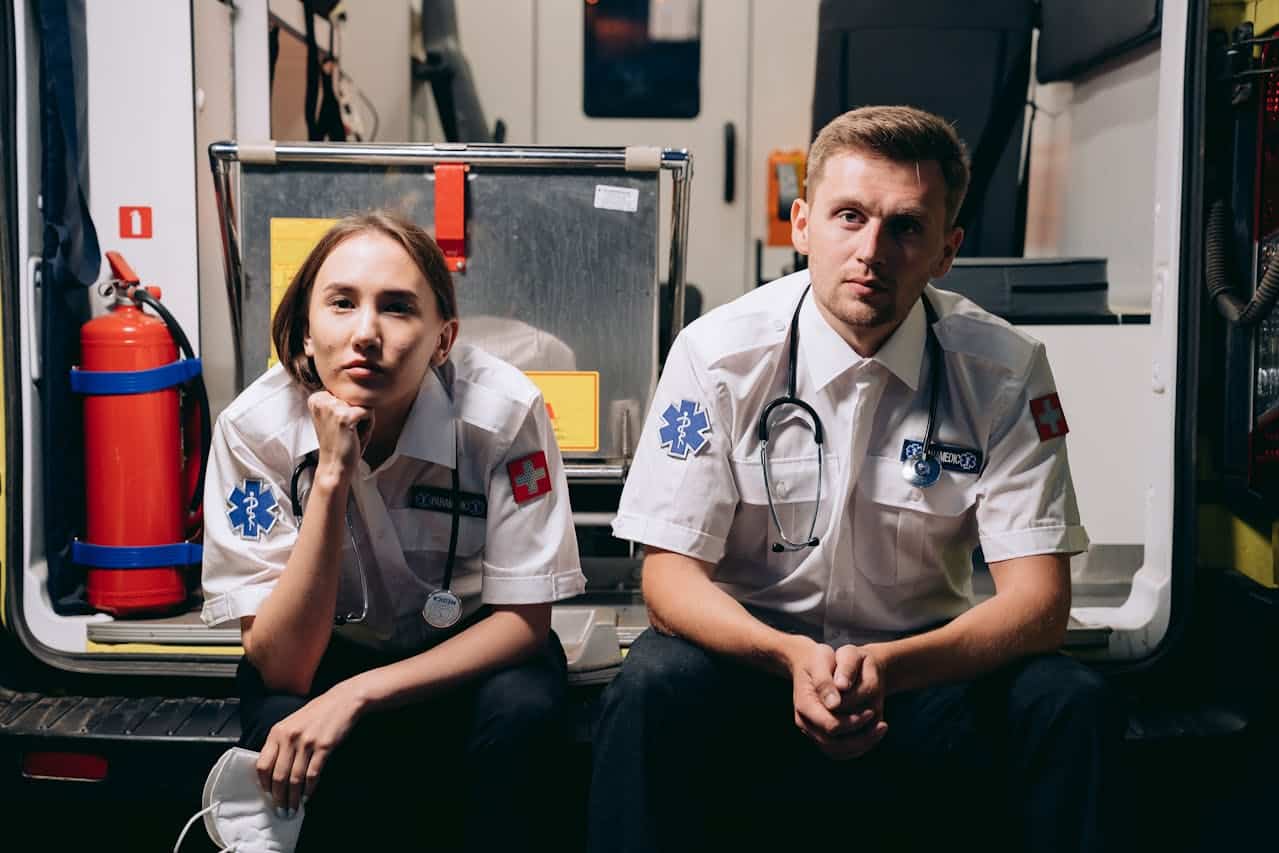
First responder PTSD develops through cumulative trauma exposure rather than single incidents, causing police, firefighters, and paramedics to avoid seeking help due to career fears and cultural stigma, though evidence-based therapies like cognitive behavioral therapy and EMDR provide effective treatment while maintaining confidentiality.
Why do officers who face danger without hesitation avoid a conversation with a therapist? First responder PTSD doesn't follow textbook patterns, and neither do the barriers preventing police, firefighters, and paramedics from getting help they desperately need.
The cumulative trauma problem: Why first responder PTSD doesn’t fit the textbook
When most people think of PTSD, they picture a single devastating event: a car accident, an assault, a natural disaster. The diagnostic criteria in mental health manuals reflect this model, focusing on reactions to one identifiable traumatic incident. But for police officers, firefighters, and paramedics, trauma doesn’t work that way.
First responders face what researchers call chronic occupational exposures: repeated encounters with death, injury, and human suffering that accumulate over months and years of service. A paramedic might respond to three fatal overdoses in a week. A firefighter pulls bodies from wreckage. A police officer talks a parent through the worst night of their life, then does it again the next shift. None of these individual calls might seem traumatic enough to warrant concern, yet together they create a cumulative trauma load that traditional assessments weren’t designed to capture.
When trauma arrives in small, repeated doses rather than one catastrophic event, the changes happen so gradually that they’re easy to miss. You don’t wake up one day with PTSD. Instead, you notice you’re sleeping less, drinking more, or feeling numb in situations that used to move you. By the time the symptoms become undeniable, you’ve been carrying the weight for years.
Traditional symptom checklists ask about reactions to “the traumatic event,” but which event should a first responder with a decade of service choose? The child who didn’t make it? The domestic violence call that turned violent? The colleague who died in the line of duty? When your entire career is built on exposure to trauma, the standard diagnostic framework starts to break down. This fundamental mismatch between how PTSD is defined and how first responders actually experience it creates the first barrier to getting help: recognition that something is wrong in the first place.
How PTSD shows up differently in police, firefighters, and paramedics
First responders all face trauma, but the way PTSD takes hold varies dramatically depending on the uniform you wear. The triggers, symptoms, and psychological wounds that affect a police officer look different from those affecting a firefighter or paramedic. Research shows that police officers and firefighters demonstrate distinct PTSD symptom patterns, reflecting the unique nature of their work environments and trauma exposures. Understanding these differences matters because generic approaches to mental health support often miss the specific struggles each profession faces.
Police officers: Hypervigilance and threat-based trauma
Police officers develop a constant state of alertness that becomes nearly impossible to turn off. You scan every room for exits, assess strangers as potential threats, and feel your body tense when someone’s hands move out of view. This hypervigilance serves you well on patrol but can make it very difficult to relax at home.
Use-of-force incidents create a particularly complex form of trauma. Even when justified, these encounters replay in your mind, especially when paired with public scrutiny or community hostility. You second-guess split-second decisions for months or years afterward. The trauma timeline for officers often involves cumulative exposure to violence, threats, and human suffering, punctuated by critical incidents that become psychological breaking points.
Many officers experience intrusive thoughts centered on threat assessment. You might find yourself mentally rehearsing violent scenarios during mundane activities or feeling unable to let your guard down around people you love. The psychological toll of maintaining constant vigilance while managing community tensions creates a specific strain that differs from other first responder roles.
Firefighters: Survivor guilt and sensory overwhelm
Firefighters carry a unique burden when they survive situations where others didn’t. You pulled three people from a burning building but couldn’t reach the fourth. You made it home when a colleague died in a line-of-duty incident. This survivor guilt becomes a constant companion, reinforcing the feeling that you should have done more or moved faster.
Sensory triggers hit firefighters with particular intensity. The smell of smoke from a neighbor’s fireplace can trigger a full panic response. The sound of a certain alarm tone sends your heart racing even when you’re off duty. These sensory memories are involuntary and overwhelming.
Pediatric calls represent a distinct category of trauma for firefighters. Responding to incidents involving children creates psychological wounds that persist differently than adult casualties. Many firefighters report that these calls accumulate over a career, eventually breaking through even the strongest emotional defenses. The combination of physical danger, sensory intensity, and life-or-death stakes creates a trauma profile unique to fire service.
Paramedics and EMTs: The weight of medical futility
Paramedics and EMTs face a relentless cycle of trying to save lives and watching people die anyway. You performed perfect CPR, followed every protocol, and the patient still didn’t make it. This medical futility trauma builds with each call where your best wasn’t enough.
Repeated patient death creates a specific form of psychological erosion. You become numb to some deaths while others haunt you for reasons you can’t explain. The randomness of which calls stay with you adds another layer of confusion. You might handle a mass casualty incident professionally but fall apart after losing a single patient who reminded you of someone you love.
Moral injury from resource limitations compounds the trauma. You know what the patient needs, but the ambulance doesn’t carry it, the hospital is too far away, or protocol won’t allow you to provide it. This gap between what you can do and what you know should be done creates a grinding sense of inadequacy. The trauma timeline for paramedics involves constant exposure without the recovery time needed to process each incident before the next call comes in.
Dispatchers: Invisible trauma without the scene
Dispatchers experience a form of trauma that other first responders sometimes dismiss, but it’s no less real. You hear everything: the panic in voices, the background screams, the moment someone stops breathing. You guide people through CPR on their dying loved ones while sitting in a room, unable to physically help.
Vicarious trauma builds through audio alone. You don’t see the scene, which means your brain fills in the details, often imagining scenarios worse than reality. The helplessness during critical calls creates lasting psychological wounds. You stayed calm, gave perfect instructions, and the caller still couldn’t save the person. Audio triggers become pervasive: certain ringtones, voice inflections, or background sounds can instantly return you to your worst calls. Dispatchers process trauma in isolation, without the team debriefing or scene closure that other first responders experience.
Recognizing the signs: What first responder PTSD actually looks like
PTSD doesn’t announce itself with a clear diagnosis. For first responders, the symptoms often blend into the background of what feels like normal job stress, making it difficult to recognize when professional resilience has crossed into clinical territory.
The core symptoms hide in plain sight
Clinically, PTSD involves four main symptom clusters that can look very different in first responders than in the general population. Classic PTSD symptoms include intrusive memories or flashbacks, avoidance of trauma reminders, negative changes in thoughts and mood, and alterations in arousal and reactivity. A firefighter might experience intrusive images of a particular call while driving past the location. A paramedic might avoid certain streets or types of emergencies when possible. An officer might notice persistent negative beliefs about safety or trust that weren’t there before.
The arousal changes often mirror job requirements, which is precisely what makes them so hard to identify. Hypervigilance is part of officer safety training. Scanning for threats is how paramedics stay safe on scenes. When your profession demands constant alertness, recognizing when that vigilance has become pathological feels nearly impossible. The anxiety symptoms associated with PTSD, like exaggerated startle response or difficulty concentrating, can be dismissed as normal occupational hazards rather than signs that something has shifted.
When anger replaces fear
Many first responders don’t experience the fear-based presentation most people associate with PTSD. Instead, they develop what researchers call the dysphoric subtype of PTSD, characterized by emotional numbing, anger, and irritability rather than anxiety and fear. A police officer might feel emotionally flat at home, unable to connect with their kids’ excitement about school. A firefighter might experience sudden rage over minor inconveniences that would have rolled off their back years ago.
This presentation makes particular sense for first responders, whose training emphasizes action over fear. You can’t freeze when someone needs CPR or when entering a burning structure. That professional conditioning doesn’t disappear after a shift, so the trauma response adapts. Instead of fear and avoidance, you get numbness and anger, and instead of feeling too much, you feel nothing at all, except occasional bursts of irritability that seem to come from nowhere.
The body keeps score
Physical symptoms often appear before psychological ones become undeniable. Chronic pain, headaches, gastrointestinal issues, and sleep disturbances are frequently the first signs that something is wrong. A paramedic might attribute new back pain to lifting patients. An officer might blame insomnia on shift work. A firefighter might assume fatigue comes with age and the job’s physical demands.
These physical manifestations aren’t separate from PTSD. They’re part of how the nervous system responds to prolonged trauma exposure. The body stays in a state of high alert, muscles tense and ready, stress hormones elevated. Over months and years, this takes a measurable toll that gets written off as occupational wear and tear.
When job skills become symptoms
The most insidious aspect of first responder PTSD is how symptoms masquerade as professional competencies. Emotional detachment is praised as maintaining professional boundaries. Hypervigilance is rewarded as situational awareness. Difficulty trusting others is framed as healthy skepticism. Avoiding certain thoughts or conversations is just not bringing work home.
This overlap makes self-assessment nearly impossible. How do you distinguish between doing your job well and developing a trauma response when they require the same behaviors? A police officer who compartmentalizes emotions at crime scenes is demonstrating good professional practice. That same officer who can’t access emotions at home may be experiencing a PTSD symptom. The line between the two isn’t always clear until you’re well past it.
Why police, firefighters, and paramedics don’t seek help
The gap between needing help and getting it is particularly wide for first responders. Research shows that 30% of first responders develop behavioral health conditions, yet most never reach out for support. Understanding why requires looking beyond individual reluctance to the systems and cultures that actively discourage help-seeking.
Career and institutional fears
The fear of professional consequences isn’t paranoia. It’s based on real policies and observed outcomes. Many first responders worry that admitting to mental health struggles will trigger a fitness-for-duty evaluation, leading to weapon removal, reassignment to desk duty, or being placed on administrative leave. These aren’t just inconveniences. They represent a potential derailment of career progression, lost overtime opportunities, and the real possibility of being passed over for promotions.
The concern about confidentiality runs deep. Even when employee assistance programs promise privacy, first responders often doubt whether their disclosure will truly stay confidential within tight-knit departments. The fear of being labeled unreliable by crew members carries enormous weight in professions where trust can mean the difference between life and death. Studies indicate that 10% of rescue workers develop PTSD, yet the professional risks of acknowledging traumatic disorders often feel greater than the risks of suffering in silence.
The culture of stoicism
First responder culture has long celebrated emotional toughness as a professional virtue. The unwritten rule is simple: you handle what you see, you don’t complain, and you certainly don’t let it affect you. This expectation of invulnerability gets reinforced daily through informal interactions, locker room conversations, and the subtle ways that emotional expression gets dismissed or mocked.
The “I’ve seen worse” trap becomes a powerful silencing mechanism. When someone mentions a difficult call, there’s often a colleague ready to one-up them with a more gruesome story. This competitive suffering creates an environment where reaching out feels like admitting weakness. You start to question whether your reaction is even valid, and if others have handled worse without help, what does it say about you if you can’t?
Practical barriers to access
Even when first responders overcome cultural and career fears, logistical obstacles remain. Shift work makes scheduling traditional therapy appointments nearly impossible. A firefighter working 24-hour shifts can’t easily commit to weekly sessions at 3 p.m. on Thursdays. Paramedics rotating through day, swing, and night shifts face constantly changing schedules that conflict with standard office hours.
The shortage of mental health providers who genuinely understand first responder culture compounds the problem. Many people in these professions have tried therapy only to spend sessions explaining their job instead of addressing their symptoms. When a therapist doesn’t understand the realities of the work, the unique stressors, or the cultural context, it’s hard to feel truly understood. Geographic barriers matter too, particularly in rural areas where anonymity is already limited and specialized providers are scarce.
Does your department actually protect mental health disclosures? A policy evaluation guide
You’re right to question whether your department’s mental health resources are truly confidential. The answer depends on which program you’re using and what your specific department policies actually say, not what supervisors claim they say.
EAP versus department programs: where confidentiality lives
Employee Assistance Programs (EAPs) typically operate outside your department’s chain of command. They’re usually run by third-party companies that cannot share information with your employer without your written consent, except in cases of imminent danger to yourself or others. Your supervisor won’t know you called, what you discussed, or how many sessions you attended.
Department-run programs operate under different rules. Even well-intentioned peer support teams or in-house counselors may have reporting obligations that override confidentiality. Some departments require notification when certain personnel access mental health services, regardless of the reason. The critical question to ask: who pays the counselor’s salary, and who can access the records?
HIPAA protections and their public safety limitations
HIPAA (Health Insurance Portability and Accountability Act) does protect your medical information, including mental health records. Your therapist cannot share details of your treatment without your permission. HIPAA has gaps in public safety contexts, though. Fitness-for-duty evaluations exist outside typical HIPAA protections because they’re employer-initiated, not treatment. If your department orders you to undergo a psychological evaluation, that’s an employment matter, not protected healthcare. The evaluator works for your employer, not for you.
What actually triggers fitness-for-duty evaluations
Fitness-for-duty evaluations don’t happen because you sought help. They happen when your behavior or performance raises concerns about your ability to do your job safely. Common triggers include use-of-force incidents under investigation, threats made at work, significant performance decline documented over time, on-duty accidents suggesting impairment, or mandatory referrals after critical incidents in some departments. Simply attending therapy, taking prescribed medication properly, or voluntarily seeking support through appropriate channels should not trigger an evaluation.
Union contract provisions worth examining
Your collective bargaining agreement may offer stronger mental health protections than department policy alone. Look for language that specifically addresses confidentiality of voluntary mental health treatment, limits on when fitness evaluations can be ordered, and protections against retaliation for seeking help. Some contracts explicitly state that voluntary participation in EAP or approved counseling programs cannot be used in disciplinary proceedings or promotional decisions.
Red flags indicating poor confidentiality protection
Certain policies signal that mental health disclosures may not stay confidential. Be cautious if your department requires supervisory notification when personnel access mental health services, maintains mental health records in your personnel file rather than separately, uses in-house counselors who also conduct fitness evaluations, or has vague policies about when information may be shared. Pay attention to what actually happens, not just what’s written.
Green flags indicating genuine psychological safety
Departments with genuine psychological safety use independent EAPs with clear confidentiality policies, maintain separate health records systems inaccessible to supervisors, have written policies explicitly protecting voluntary help-seeking, and establish clear, narrow criteria for fitness evaluations. Additional positive indicators include peer support programs with legal privilege protections, union contracts with specific mental health confidentiality language, and leadership that publicly supports mental health treatment. The best indicator is talking to colleagues who’ve actually used the services.
Questions to ask before disclosing to any program
Before you share anything about your mental health at work, get clear answers to these questions:
- Is this program run internally or by an outside organization?
- What information, if any, goes back to my department?
- Under what circumstances would you be required to break confidentiality?
- Are records kept separately from my personnel file, and who has access to those records?
- If I’m prescribed medication, who needs to know?
- Does participation in this program affect my fitness-for-duty status?
- Has anyone in this department faced career consequences after using this service?
- Can I see the written confidentiality policy?
If you can’t get straight answers to these questions, that tells you something important.
Peer support program limitations and protections
Peer support programs offer unique benefits because peers understand the work in ways that others outside the profession cannot. Their confidentiality protections vary dramatically by state and department, though. Some states grant peer support teams legal privilege, meaning conversations cannot be subpoenaed or disclosed without your permission. Others offer no special protections, making peer supporters potential witnesses if issues end up in court or internal investigations. Even with legal protections, peer supporters are not therapists. Most peer support programs work best as a bridge to professional help, not as a replacement for it.
A guide for spouses and partners: When job stress crosses into PTSD territory
You know your partner better than anyone. You’ve seen them come home exhausted after double shifts, frustrated by bureaucracy, or quiet after particularly difficult calls. But lately, something feels different. The question is whether what you’re witnessing is normal occupational stress or something that requires intervention.
Warning signs that go beyond a bad shift
Normal job stress typically improves with time off, sleep, or a few days away from work. PTSD symptoms persist and often worsen regardless of rest. Watch for changes that last weeks rather than days. Your partner might start refusing family gatherings they once enjoyed, or react with disproportionate anger to minor household issues. You might notice them checking door locks repeatedly or positioning themselves with a clear view of exits even at home.
Physical changes often appear before emotional ones. Chronic insomnia that doesn’t improve on vacation days, significant weight changes unrelated to intentional lifestyle choices, or new health complaints like persistent headaches or digestive problems can all signal deeper distress. Some first responders develop hypervigilance that extends into family life, constantly scanning for threats at the grocery store or becoming agitated in crowds.
How family relationships shift
Pay attention to withdrawal from parenting responsibilities your partner previously handled. A firefighter who coached Little League might suddenly make excuses to miss games. A paramedic who loved bedtime stories might avoid tucking kids in. This isn’t laziness but often represents emotional numbing, a core PTSD symptom that makes connecting with loved ones feel impossible.
Intimacy changes frequently signal trauma responses. Your partner might seem physically present but emotionally unreachable. Conversations that once flowed easily now feel like pulling teeth. Some first responders unconsciously recreate the emotional distance they maintain at work, treating home like another scene they need to manage rather than a place to be vulnerable.
Starting the conversation without starting a fight
Timing matters enormously. Never initiate serious conversations immediately after a shift or during high-stress periods. Choose moments when your partner seems relatively calm and you have privacy without time pressure. Lead with specific observations rather than accusations or diagnoses. Instead of “You have PTSD and need help,” try “I’ve noticed you’ve been having nightmares three or four times a week for the past month, and I’m concerned.” Use “I” statements that express your feelings: “I feel worried when I see you pulling away from the kids” rather than “You’re a terrible parent now.”
Expect defensiveness and prepare for this not to be a single conversation. Your partner has likely spent years building psychological armor that won’t come down in one discussion. If they shut down, don’t push harder in the moment. Plant the seed and return to it later.
Supporting recovery without enabling avoidance
There’s a delicate balance between respecting your partner’s need for space and allowing PTSD to dictate family life. You can accommodate reasonable requests while maintaining boundaries. If crowded restaurants trigger anxiety, exploring quieter dining options shows support. Canceling all social engagements indefinitely, though, enables avoidance that ultimately reinforces PTSD symptoms. Encourage gradual re-engagement rather than demanding immediate change. Small steps forward matter more than giant leaps.
Avoid becoming their therapist or trying to fix their trauma. Your role is supportive partner, not treatment provider. This means listening without trying to solve, validating their experience without agreeing that avoidance is the answer, and maintaining your own boundaries about what you need from the relationship.
Recognizing when their trauma becomes yours
Living with someone experiencing PTSD takes a toll. Secondary traumatic stress affects family members who absorb the emotional weight of their loved one’s trauma. You might develop your own sleep problems, anxiety, or hypervigilance. Watch for signs you’re losing yourself in their struggle. Are you walking on eggshells to avoid triggering their anger? Have you stopped making plans because you can’t predict their mood? These patterns indicate you need support too, not just for your sake but because you can’t effectively support someone else while struggling yourself.
First responder family support groups exist specifically for this reality. Connecting with others who understand the unique challenges of loving someone in this profession provides validation and practical strategies. Taking care of your own mental health is necessary for the long-term health of your relationship and family.
The link between first responder PTSD and substance use
When living with untreated PTSD, substances can feel like the only thing that quiets your mind. Alcohol numbs the hypervigilance that keeps you scanning every room for threats. Prescription painkillers soften the edges of intrusive memories. For many first responders, what starts as an occasional drink to unwind gradually becomes the primary way they manage PTSD symptoms they can’t talk about openly.
The connection between PTSD and substance use is well documented. Research confirms that PTSD often co-occurs with substance use disorders, creating a cycle that’s difficult to break without professional support. Substances provide temporary relief from nightmares, flashbacks, and emotional numbness, which reinforces their use. Over time, though, they worsen the underlying symptoms, increase depression and anxiety, and create new problems that compound the original trauma.
First responder culture can accelerate this pattern. Post-shift drinks are normalized social rituals in many firehouses and police departments. The same environment that discourages emotional vulnerability often celebrates alcohol as an acceptable way to decompress, making it harder to recognize when social drinking has shifted into self-medication.
Warning signs include drinking alone, needing alcohol to fall asleep, increasing tolerance, drinking to manage specific symptoms like anxiety or irritability, and feeling defensive when others express concern. For first responders with access to prescription medications through workplace injuries, the risk extends to opioids and benzodiazepines that can be just as dangerous.
Addressing substance use isn’t about judgment. It’s about recognizing that self-medication is a logical response to unbearable symptoms when other support feels unavailable. Effective treatment addresses both the PTSD and the substance use together, because treating one without the other rarely leads to lasting recovery.
Treatment options that actually work for first responders
Finding the right treatment means understanding what actually works, not just what sounds good on paper. Several evidence-based therapies have proven effective specifically for emergency service personnel with PTSD. Many first responders prefer treatments that feel active rather than passive, since sitting and talking about feelings doesn’t always appeal to people trained to take action and solve problems.
Evidence-based therapies for PTSD
Three treatments have the strongest research support for PTSD in first responders. Eye Movement Desensitization and Reprocessing (EMDR) uses bilateral stimulation while you recall traumatic memories, helping your brain reprocess them without the overwhelming emotional charge. Cognitive Processing Therapy (CPT) focuses on identifying and changing unhelpful beliefs that developed after trauma. Prolonged Exposure therapy gradually helps you approach trauma-related memories and situations you’ve been avoiding.
Research on emergency service personnel shows that exposure-based cognitive behavioral therapy effectively reduces PTSD symptoms in firefighters, paramedics, and police officers. Clinical practice guidelines recommend these trauma-focused approaches as first-line treatments because they target the core mechanisms that maintain PTSD.
Many first responders gravitate toward EMDR and prolonged exposure because they feel more structured and goal-oriented than traditional talk therapy. CPT appeals to those who want to understand the logic behind their reactions and actively challenge distorted thinking patterns.
Peer support programs offer valuable connection and understanding, but they’re not a substitute for evidence-based treatment. Talking with colleagues who’ve been through similar experiences can reduce isolation and normalize your reactions. These programs work best as a complement to professional therapy rather than a replacement for it.
Critical Incident Stress Debriefing (CISD) was once widely used after traumatic calls, but current research shows it doesn’t prevent PTSD and may even interfere with natural recovery for some people. Single-session debriefings aren’t harmful, but they’re not the protective intervention many departments once believed them to be.
Finding a therapist who gets it
Not every therapist understands first responder culture. You need someone who won’t flinch at the details of your work, who understands why you can’t just “leave it at the station,” and who respects the real pressures you face around confidentiality and career consequences.
Culturally competent providers recognize that first responder PTSD often looks different from civilian PTSD. They understand operational stress, the impact of repeated exposure rather than single incidents, and why advice like “find a less stressful job” misses the point entirely. They know that your identity as a first responder matters and that effective treatment doesn’t require you to leave the profession you care about.
Look for therapists with experience treating first responders or military personnel. Ask directly about their familiarity with emergency services culture. Trauma-informed approaches recognize how trauma affects your nervous system, relationships, and worldview. Therapists using these approaches understand that symptoms like hypervigilance and emotional numbing are adaptive responses, not character flaws. They work with your strengths rather than pathologizing the very qualities that make you effective at your job.
Online and telehealth options
Telehealth addresses two of the biggest barriers first responders face: confidentiality concerns and scheduling conflicts. You can attend sessions from home without worrying about being seen in a therapist’s waiting room. Sessions can happen early morning, late evening, or on your days off, and you control the environment, which matters when you’re discussing vulnerable experiences.
Online therapy platforms let you connect with licensed therapists outside your immediate area, reducing the risk of overlap with your professional world. If confidentiality and scheduling flexibility matter to you, exploring online therapy options may be worth considering. You can start with a free assessment with licensed therapists who can meet with you on your schedule, with no department involvement, no waiting rooms, and no pressure to commit before you’re ready.
Residential programs offer intensive treatment when symptoms are severe or when you need complete separation from work stress. These programs typically last two to six weeks and provide structured daily therapy, peer support, and skills training. Outpatient therapy offers more flexibility and lets you practice new skills in your real environment while receiving support. Most first responders start with outpatient treatment and only consider residential programs if symptoms worsen or interfere significantly with work and relationships.
Taking the first step: What recovery can look like
Recovery from PTSD is not only possible but common when first responders access appropriate treatment. Many people in law enforcement, firefighting, and emergency medical services have successfully addressed their symptoms while continuing to serve in their roles. The key is finding treatment that fits your schedule and respects the realities of your work environment.
Initial assessment typically involves a confidential conversation with a licensed therapist who understands first responder culture. You’ll discuss your symptoms, work experiences, and what you hope to gain from treatment. From there, your therapist might recommend evidence-based approaches like cognitive behavioral therapy or solution-focused therapy, which offers practical, action-oriented strategies that align with how many first responders prefer to work through challenges.
You don’t have to wait for formal treatment to begin making changes. Small steps like reconnecting with family members, resuming a hobby you’ve let go, or talking to one trusted person outside your department can create momentum. Building a support system beyond your station or precinct gives you space to process experiences without the weight of department politics or perceived judgment from colleagues.
Most first responders continue working throughout treatment, often with improved job performance as symptoms decrease. Sessions can be scheduled around shifts, and online therapy offers flexibility that traditional office visits can’t match. With consistent treatment, many people experience significant symptom reduction within months, regaining sleep quality, emotional regulation, and connection with loved ones.
Starting with a confidential conversation can be easier than walking into an office. You can begin with a free assessment to explore support options with a licensed therapist who works around your schedule, completely separate from any department program and at your own pace.
You don’t have to carry this alone
PTSD in first responders looks different because the trauma accumulates differently. The hypervigilance that keeps you safe on calls, the emotional numbing that helps you function at scenes, and the anger that replaces fear are all responses to repeated exposure that traditional frameworks weren’t designed to address. Recognition is the first barrier, but the cultural pressure to stay silent and the legitimate fears about career consequences create additional walls between you and support.
Effective treatment exists, and many first responders have found relief while continuing to serve in their roles. You can start with a free assessment to explore confidential support options with licensed therapists who understand your work, with scheduling that fits around your shifts and no department involvement.
FAQ
-
How is PTSD different for police officers and paramedics compared to regular people?
First responder PTSD often develops from repeated exposure to traumatic situations rather than a single incident, creating a cumulative effect that builds over time. Unlike civilian trauma, first responders experience trauma as part of their job duties, which can make it harder to recognize when normal stress becomes a serious mental health concern. The culture of toughness and self-reliance in these professions also means symptoms often go unaddressed longer than they would in civilian populations. Understanding this difference is the first step toward recognizing when professional help is needed.
-
Does therapy actually work for first responders with PTSD?
Yes, therapy is highly effective for first responder PTSD, with evidence-based treatments like Cognitive Behavioral Therapy (CBT) and trauma-focused therapies showing strong success rates. Many first responders find that working with a therapist who understands their unique work environment and stressors leads to better outcomes than general treatment approaches. Therapy helps develop healthy coping strategies, process traumatic experiences, and rebuild the sense of control that trauma often takes away. The key is finding a licensed therapist experienced in treating occupational trauma and first responder populations.
-
Why don't police and paramedics seek help for trauma even when they're struggling?
First responder culture often promotes toughness and self-reliance, making it feel like seeking help is a sign of weakness or failure. Many fear that admitting to mental health struggles could impact their career, security clearance, or colleagues' trust in their ability to handle dangerous situations. There's also concern about confidentiality and whether seeking therapy might become part of their employment record. Additionally, first responders are trained to help others in crisis, which can make it psychologically difficult to admit they need help themselves.
-
I'm a first responder and I think I need help with trauma - where do I start?
The best first step is connecting with a licensed therapist who has experience treating first responder trauma and understands the unique challenges of your profession. ReachLink makes this easier by using human care coordinators to personally match you with therapists who specialize in occupational trauma, rather than using algorithms or guesswork. You can start with a free assessment to discuss your specific situation and get connected with the right therapeutic support. Taking this step shows strength and professionalism, not weakness, as you're prioritizing both your wellbeing and your ability to serve others effectively.
-
What types of therapy work best for first responder PTSD?
Trauma-focused therapies like Cognitive Processing Therapy (CPT) and Eye Movement Desensitization and Reprocessing (EMDR) have shown particularly strong results for first responder PTSD. Cognitive Behavioral Therapy (CBT) is also highly effective, especially when adapted to address the specific stressors and thought patterns common in law enforcement and emergency medical work. Many first responders benefit from therapies that help them reframe their relationship with traumatic memories while building practical stress management skills they can use on the job.