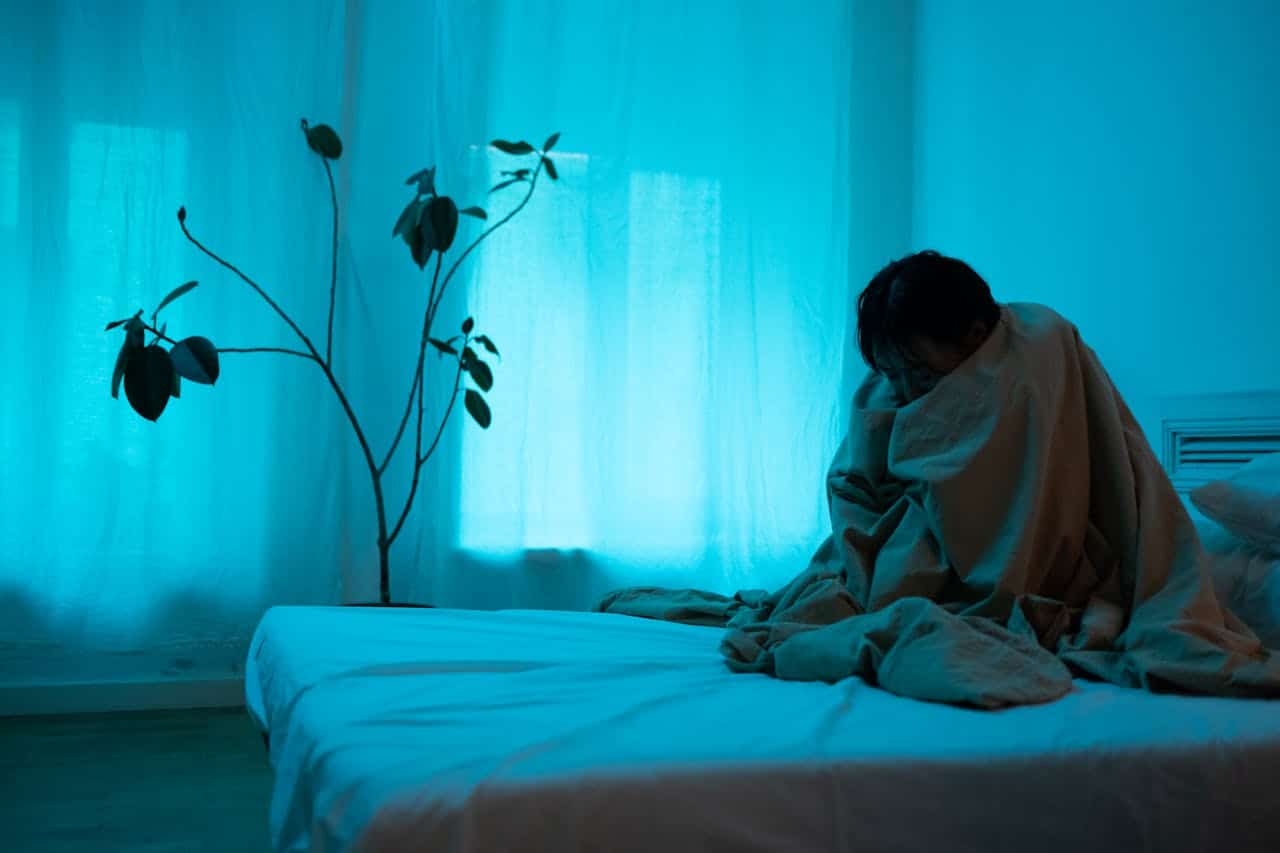
Nocturnal panic attacks jolt you awake from deep sleep with intense fear and physical symptoms, feeling uniquely disorienting because your brain's rational thinking centers remain offline while your fear response activates, requiring specialized therapeutic approaches that differ from standard daytime panic treatments.
Why do nocturnal panic attacks feel so much more terrifying than daytime ones? The answer lies in your brain's architecture during sleep - when panic strikes at night, your rational mind is offline while your fear center runs unchecked, creating confusion that's neurological, not personal weakness.
What are nocturnal panic attacks?
Nocturnal panic attacks are sudden episodes of intense fear that jolt you awake from sleep, typically occurring during the deeper stages of non-REM sleep. Unlike daytime panic attacks, which often have identifiable triggers, these nighttime episodes strike without warning during sleep transitions. You’re not having a nightmare or responding to a disturbing dream. Instead, your body’s alarm system activates while you’re unconscious, yanking you from sleep into a state of overwhelming terror.
These attacks most commonly occur during NREM stages 2 and 3, the phases of sleep when your brain waves slow down and your body enters deeper rest. The timing follows a predictable pattern: most people experience nocturnal panic attacks within one to three hours after falling asleep, right when they’ve settled into their deepest sleep cycle. This timing distinguishes them from early morning anxiety or sleep disturbances caused by dreams, which typically happen during REM sleep later in the night.
The experience itself is profoundly disorienting. You wake abruptly with your heart racing, chest tight, and an overwhelming sense of dread, but you can’t identify what triggered the fear. There’s no lingering dream imagery to explain the panic. You simply transition from deep sleep to full-blown terror in seconds, leaving you confused and frightened in the dark.
Nocturnal panic attacks affect a significant portion of people with panic disorder. Research indicates that approximately 44–71% of people with panic disorder experience at least one nocturnal attack. The distinction between nocturnal panic and nightmares is critical: nightmares are dream experiences that may cause distress, while nocturnal panic attacks are physiological events that occur independently of dream content.
Symptoms of nocturnal panic attacks
Waking up from a nocturnal panic attack feels fundamentally different from experiencing one during the day. Your body has already launched into full panic mode before your mind catches up to what’s happening. You might bolt upright in bed with your heart pounding so hard you can feel it in your throat, gasping for air like you’ve been running. The confusion of transitioning from sleep to terror amplifies every sensation.
The physical symptoms mirror those of daytime panic attack symptoms, but they often feel more overwhelming. Your heart races uncontrollably, sometimes reaching 120 beats per minute or higher. Chest tightness can make you wonder if something is seriously wrong with your heart. You might experience shortness of breath or respiratory symptoms including choking sensations that make it feel impossible to get enough air. Sweating, trembling, and numbness or tingling in your hands and feet are common, adding to the sense that your body has turned against you.
The psychological symptoms hit just as hard. An intense, nameless fear washes over you, often accompanied by a powerful sense of impending doom. You might feel like you’re dying or losing control of reality itself. Some people experience derealization, where the bedroom around them feels strange or unreal. These feelings arrive without context or warning, making them especially frightening.
Most nocturnal panic attacks peak within 10 to 20 minutes, though those minutes can feel endless. Physical symptoms may dominate your awareness more than during daytime attacks because your cognitive functions need time to fully wake up.
Even after the acute symptoms subside, the aftermath lingers. Residual anxiety can persist for hours, leaving you wired and exhausted at the same time. Many people struggle with post-attack insomnia, lying awake afraid to fall back asleep. The fear of another episode can become as disruptive as the attack itself, creating a cycle that makes restful sleep feel impossible.
Why nocturnal panic attacks are uniquely disorienting: the neuroscience
When you wake from a nocturnal panic attack, the overwhelming confusion you feel isn’t just about being startled awake. Your brain is literally caught between two incompatible states: the deep unconsciousness of sleep and the hyperarousal of panic. Understanding what happens in your brain during these episodes can help explain why they feel so much more terrifying than daytime panic attacks.
Your rational brain is offline when panic strikes
During NREM sleep stages 2 and 3, the parts of your brain that help you make sense of the world are largely shut down. Your prefrontal cortex, the region responsible for rational thought, decision-making, and reality-testing, operates at minimal capacity while you sleep. This means when panic strikes at night, you don’t have access to the cognitive tools that might help you recognize what’s happening.
During a daytime panic attack, your prefrontal cortex can at least attempt to provide context: “This is a panic attack. I’ve had these before. I’m not dying.” At night, that reassuring voice is essentially unavailable. You’re experiencing raw fear without the mental framework to interpret it.
The amygdala takes control without oversight
Your amygdala, the brain’s fear center, doesn’t need permission from higher cognitive regions to sound the alarm. During nocturnal panic attacks, it activates with full intensity while your executive functions remain dormant. Think of it like a car alarm going off in an empty parking lot with no owner present to assess whether there’s an actual threat.
This creates what neuroscientists call “fear without context.” Your body responds to a threat signal, but your conscious mind wakes into the middle of that response with no idea what triggered it. The terror feels formless and overwhelming precisely because your brain hasn’t constructed a narrative around it yet.
Sleep inertia amplifies the confusion
Even under normal circumstances, waking from deep sleep involves a period of cognitive impairment called sleep inertia. Your brain needs 5 to 20 minutes to fully transition to wakefulness. During this time, your judgment is clouded, your reaction time is slower, and your ability to think clearly is significantly compromised.
When you add panic to this already disoriented state, the effect multiplies. You’re trying to assess a crisis situation while your brain is still partially asleep.
Your nervous system experiences whiplash
During sleep, your parasympathetic nervous system dominates, keeping your heart rate low, your breathing slow, and your body in a state of rest and repair. A nocturnal panic attack represents a sudden, dramatic shift to sympathetic nervous system activation. Your heart rate can spike from 60 beats per minute to 120 or higher within seconds.
This abrupt transition feels more extreme than panic that builds during waking hours. Your body goes from maximum relaxation to maximum alarm with no gradual escalation, making your racing heart and gasping breaths feel even more catastrophic.
CO2 fluctuations may trigger the alarm
Some researchers believe that people who experience nocturnal panic attacks have heightened sensitivity to carbon dioxide fluctuations during sleep. Throughout the night, your breathing naturally varies, and CO2 levels in your blood shift accordingly. For some people, these normal changes may trigger a false suffocation alarm in the brain, which helps explain why nocturnal panic attacks often involve intense feelings of breathlessness or choking.
Cortisol’s early morning surge
Your body’s cortisol levels naturally rise in the early morning hours, typically peaking around 8 or 9 a.m. For people prone to anxiety, this natural cortisol increase may prime the system for panic, particularly during the vulnerable hours between 2 and 6 a.m. In someone already susceptible to panic, the hormone’s activating effects can tip the scales toward a nocturnal episode.
Disorientation is neurology, not weakness
The confusion and terror you feel when waking from a nocturnal panic attack isn’t a character flaw or a sign of weakness. It’s the predictable result of your brain’s architecture and sleep physiology. Your prefrontal cortex is offline, your amygdala is hyperactive, sleep inertia clouds your thinking, and your nervous system is in shock. You’re not failing to cope. You’re dealing with a uniquely challenging brain state that would disorient anyone.
What causes nocturnal panic attacks?
Nocturnal panic attacks don’t emerge from nowhere. They develop from a complex interaction of biological vulnerabilities, psychological patterns, and environmental factors that create the conditions for your brain to trigger a false alarm while you sleep.
The biological foundation
Genetics play a significant role in who experiences panic attacks. Panic disorder runs in families, and researchers are exploring whether the nocturnal presentation may have its own distinct genetic markers. Your brain chemistry and nervous system sensitivity also matter. Some people are simply wired with a more reactive stress response system, making them more vulnerable to misinterpreting normal body sensations as dangerous.
Chronic stress and anxiety disorders are the strongest predictors of nocturnal panic attacks. When you carry persistent worry and tension throughout your day, your nervous system remains on high alert even as you sleep. Research shows that intolerance of uncertainty and other cognitive vulnerabilities contribute significantly to panic vulnerability.
Hypervigilance creates a self-perpetuating cycle. If you’ve had one nocturnal panic attack, you may develop anticipatory anxiety about sleep itself. This fear keeps your nervous system primed for threat detection, ironically making another episode more likely.
Sleep and lifestyle triggers
Sleep-related problems frequently trigger or worsen nocturnal panic. Studies confirm that sleep apnea significantly increases panic disorder risk, likely because the breathing interruptions create physical sensations that your brain interprets as danger. Sleep deprivation and irregular sleep schedules also destabilize your nervous system.
Substance use plays a role as well. Caffeine consumed late in the day can trigger nighttime panic. Alcohol might help you fall asleep initially, but withdrawal effects during the night can spark panic episodes. Certain medications, particularly stimulants or those affecting serotonin, may contribute too.
Medical conditions and the kindling effect
Several medical conditions can trigger or worsen nocturnal panic attacks. Hyperthyroidism, cardiac arrhythmias, and GERD can all create physical sensations during sleep that your brain misinterprets as life-threatening. Once your brain learns to panic at night, the pattern can become self-sustaining: each episode reinforces the neural pathways, making future episodes more likely even after the original trigger resolves. This is why early intervention matters.
The diagnostic maze: conditions that mimic nocturnal panic
Waking up gasping for air doesn’t always mean you’re having a panic attack. Several medical and sleep-related conditions can produce strikingly similar symptoms, making accurate diagnosis essential. Nocturnal panic has specific features: you wake fully conscious, you don’t recall any dreams, fear is your dominant emotion, and you remember every detail of the episode. These distinguishing characteristics separate panic from other conditions that might seem identical in the moment.
Night terrors vs. nocturnal panic attacks
Night terrors typically occur in children and involve dramatic behaviors like screaming, thrashing, or sitting bolt upright with eyes wide open. The person experiencing a night terror usually doesn’t fully wake up and has little to no memory of the episode the next morning.
Nocturnal panic attacks, by contrast, involve complete awakening with full awareness. You know exactly what’s happening as your heart races and your chest tightens, and you’ll remember the experience vividly the next day. Adults are far more likely to experience nocturnal panic, while night terrors predominantly affect children between ages three and twelve.
Nightmares occur during REM sleep, and when you wake from one, you can usually recall the dream content. The emotional distress connects directly to what you dreamed about. With nocturnal panic, there’s no dream narrative at all. You simply wake into terror without any storyline or imagery to explain it.
Sleep apnea: the overlooked mimic
Sleep apnea causes repeated breathing pauses during sleep, and the resulting oxygen deprivation can jolt you awake with sensations remarkably similar to panic. You might gasp for air, feel your heart pounding, and experience genuine fear. The key difference is that sleep apnea typically involves loud snoring, witnessed breathing pauses by a bed partner, and chronic daytime exhaustion that doesn’t improve with treatment for anxiety symptoms.
Other medical conditions can also masquerade as nocturnal panic. Gastroesophageal reflux disease (GERD) causes chest burning and discomfort that worsens when lying flat, sometimes accompanied by an acidic taste. Hypoglycemia, particularly in people with diabetes, produces nighttime sweating, confusion, and rapid heartbeat that resolves after consuming glucose. Nocturnal seizures may involve confusion, repetitive movements, or loss of bladder control alongside altered consciousness.
When to seek emergency evaluation
Some symptoms require immediate medical attention, even if you suspect panic. Chest pain accompanied by shortness of breath, pain radiating to your arm or jaw, or feelings of impending doom warrant emergency evaluation to rule out cardiac events. While panic attacks and heart attacks can feel similar, the stakes are too high to guess.
Seek urgent care if you experience irregular heartbeat sensations that persist, severe chest pain that differs from previous panic episodes, or confusion that doesn’t resolve within minutes of waking. A thorough assessment including an electrocardiogram, blood work, and potentially a sleep study can distinguish panic from conditions requiring different treatment approaches.
Why standard panic treatments fall short at night
When you wake up gasping at 3 a.m., your therapist’s advice to challenge your catastrophic thoughts feels impossible to execute. The treatments that work well for daytime panic often fall short at night because they rely on cognitive capacities that simply aren’t available when you’re jolted from sleep.
Most evidence-based panic treatments assume you’ll notice anxiety building and can intervene before it spirals. Cognitive behavioral therapy teaches you to identify early warning signs, question distorted thoughts, and use reasoning to calm your nervous system. Nocturnal panic bypasses this entire process. You go from deep sleep to full terror in seconds, with no warning signs to catch and no gradual buildup to interrupt. Your prefrontal cortex needs time to fully come online after sleep, and asking yourself to engage in cognitive restructuring during those first disorienting minutes is like asking someone to solve a complex problem immediately after anesthesia wears off.
Exposure therapy, another cornerstone of panic treatment, depends on identifying and gradually confronting specific triggers. But what do you expose yourself to when the trigger is sleep itself? Nocturnal panic attacks lack the predictable cues that make exposure therapy effective, because they happen during an altered state of consciousness you can’t deliberately enter while awake.
Even simple grounding techniques become surprisingly complex at night. The popular 5-4-3-2-1 method requires sustained attention, working memory, and sequential processing. When you’re cognitively impaired from sudden waking and flooded with adrenaline, following multi-step instructions feels overwhelming.
Medication presents its own nocturnal challenges. Benzodiazepines can stop a panic attack quickly, but taking them at 2 a.m. often means waking up groggy and impaired the next day. SSRIs and other daily medications help reduce overall panic frequency, but they don’t prevent acute episodes when they strike.
Perhaps the most difficult aspect of nocturnal panic is how it creates a self-perpetuating cycle. After experiencing even one nighttime attack, you may develop anticipatory anxiety about going to bed. This fear disrupts the deep, restorative sleep your nervous system needs to regulate itself. Poor sleep increases overall anxiety sensitivity, which makes future attacks more likely.
Research on the specific challenges of nocturnal panic validates that these attacks require different treatment approaches due to their unique presentation, not just more intensive versions of standard protocols. Most mental health providers receive little training in these specialized approaches, which means finding someone who truly understands how to treat nighttime panic can be frustratingly difficult.
Treatment options for nocturnal panic attacks
Treating nocturnal panic attacks requires a different approach than treating daytime panic. The most effective treatments recognize this reality and work around it, building safeguards during the day that activate automatically at night. Many people see significant improvement within weeks once they start addressing both the panic itself and the sleep disruption that fuels it.
Therapy approaches adapted for nocturnal panic
Cognitive behavioral therapy remains the gold standard for panic disorder, but it needs modification for nocturnal episodes. For nocturnal panic, therapists adapt the approach by doing the heavy cognitive lifting during daytime sessions. You work through catastrophic interpretations when you’re fully awake, examining evidence that your racing heart isn’t a heart attack or that the suffocating feeling won’t actually stop your breathing. Then you develop simplified nighttime protocols that don’t require complex reasoning.
Working with a therapist who understands nocturnal panic can help you develop personalized protocols that work within the constraints of 3 a.m. cognition. You can connect with a licensed therapist through ReachLink to explore whether specialized panic-focused therapy is right for you.
Interoceptive exposure, a core CBT technique, also gets modified for sleep context. During the day, you deliberately trigger panic sensations in controlled settings: hyperventilating to create dizziness, running in place to increase heart rate, or breathing through a straw to simulate suffocation. The goal is desensitization, learning that these sensations are uncomfortable but not dangerous. For nocturnal panic, therapists might have you practice these exercises right before bed or after waking naturally at night, building tolerance in the actual context where panic strikes.
The ANCHOR protocol: grounding techniques for 3 a.m.
When panic hits in the middle of the night, you need something simple enough to follow with minimal cognitive function. The ANCHOR protocol provides a step-by-step framework designed specifically for nocturnal panic:
- Acknowledge the panic by naming it out loud or in your mind: “This is a panic attack. I’ve had these before. They pass.” This simple labeling activates whatever prefrontal cortex function you have available.
- Notice your surroundings by choosing one simple sensory anchor. Feel the texture of your sheets, notice the temperature of the air, or focus on a familiar object you can see in the darkness.
- Controlled breathing comes next, but keep it simple. The 4-7-8 technique works well: breathe in for four counts, hold for seven, exhale for eight. If controlled breathing increases panic, just observe your natural breath.
- Hold position means staying where you are without fighting to fully wake up. Don’t turn on bright lights, check your phone, or get up to pace. These actions signal to your brain that there’s a real threat requiring action.
- Observe passing without resistance. You’re waiting for the panic to crest and subside, which typically takes 10 to 20 minutes. You’re not trying to stop it or make it go away faster.
- Return to rest means avoiding post-panic rumination. Once symptoms subside, return to sleep without analyzing what happened or worrying about it happening again. Save that processing for morning or your therapy session.
Medication considerations
Medication can play a role in treating nocturnal panic attacks, though it’s typically not the first-line approach. SSRIs work preventively, reducing the frequency and intensity of panic attacks over time. Tricyclic antidepressants help some people with nocturnal panic, particularly those who also have depression or haven’t responded to SSRIs.
Benzodiazepines require careful consideration. They can stop panic attacks quickly and reduce anticipatory anxiety about sleep, but they also suppress deep sleep and can create dependency. A progressive approach works best for most people: start with sleep hygiene optimization, add therapy, then consider medication if needed.
Treating underlying conditions often proves essential. If you have sleep apnea, treating it with CPAP can dramatically reduce or eliminate nocturnal panic attacks. If you have GERD, managing acid reflux prevents the choking sensations that can trigger panic.
Partner and support person protocols deserve attention too. If you share a bed, your partner can help with co-regulation during episodes by speaking in a calm, steady voice and maintaining gentle physical contact if you find it soothing. Clear guidance about what helps and what doesn’t, ideally developed with your therapist, makes this support most effective.
Breaking the fear-sleep cycle: a recovery framework
Recovery from nocturnal panic attacks follows a predictable pattern when you address both the physical sleep disruption and the psychological fear that keeps the cycle spinning. Most people see significant improvement within two to three months of consistent treatment, though the timeline varies based on how entrenched the fear-sleep cycle has become.
Weeks 1–2: stabilizing your sleep foundation
Your first priority is creating a sleep environment that signals safety rather than threat. This means consistent sleep and wake times, even on weekends, and removing anything from your bedroom that triggers anxiety about panic attacks. Keep the room cool, dark, and quiet. Avoid screens for an hour before bed and eliminate caffeine after noon. You’re not trying to eliminate panic attacks yet. You’re simply creating conditions where your nervous system can begin to downregulate.
Now you’ll introduce a simplified grounding protocol, with a key distinction: practice it during daytime drowsiness, not during actual panic attacks. Lie down when you’re relaxed but slightly sleepy and rehearse your grounding sequence. By practicing in low-stakes moments, you’re building neural pathways that become accessible when panic strikes, teaching your brain that waking up doesn’t automatically mean danger.
Weeks 5–6: addressing anticipatory anxiety
The dread of going to bed often becomes worse than the attacks themselves. Combat this with scheduled worry time: set aside 15 minutes each evening, at least two hours before bed, to write down every fear about sleeping. Once time’s up, close the notebook. Pair this with a consistent pre-sleep routine that signals safety, whether that includes gentle stretching, reading something comforting, or listening to a specific playlist. The routine becomes a bridge between wakefulness and sleep that doesn’t involve vigilance.
Weeks 7–8: reducing safety behaviors
Safety behaviors are the things you do to prevent panic attacks: sleeping with lights on, keeping your phone clutched in your hand, or avoiding sleep entirely until you’re exhausted. These behaviors actually maintain the cycle by reinforcing the belief that sleep is dangerous. Now you’ll gradually reduce them. Start with the easiest one. Each small reduction is evidence that you can tolerate uncertainty without catastrophe. This is where confidence rebuilds, one night at a time.
Measuring progress without perfectionism
Recovery is not linear, and expecting a smooth upward trajectory sets you up for unnecessary disappointment. Track three specific metrics: frequency of attacks, how quickly you recover when they do occur, and their intensity. You might have a difficult night in week six after three good weeks. That’s not failure. The trend matters more than individual data points. Self-compassion is not a soft skill here. It’s a practical tool that interrupts the hypervigilance cycle by preventing you from treating every setback as proof that you’re broken.
You’ll know the cycle is breaking when you wake up from a panic attack and think, “This is uncomfortable, but I know what to do.” Most people with nocturnal panic attacks see significant improvement within two to three months of consistent treatment, meaning attacks become less frequent, less intense, or both. Some people stop having them entirely. Others have occasional episodes during high-stress periods but recover quickly. Either outcome represents success, because you’ve reclaimed sleep as a place of rest.
When to seek professional help
You don’t need to wait until nocturnal panic attacks become unbearable before reaching out for support. Early intervention often leads to better outcomes and can prevent the development of additional complications like chronic insomnia or daytime anxiety disorders.
Consider seeking professional anxiety treatment when episodes occur more than once per week, when your daytime functioning feels impaired, or when you notice yourself avoiding sleep or developing fears about leaving your home. These patterns suggest that panic attacks are beginning to reshape your behavior in ways that can become harder to reverse over time.
Certain situations warrant more urgent evaluation. If you’re experiencing your first panic episodes after age 40, if attacks come with atypical symptoms like confusion or weakness, or if you have any concern about a cardiac or neurological cause, schedule an appointment with your primary care provider promptly. A thorough evaluation might include a sleep study, cardiac testing, and a psychological assessment to understand the full picture.
Online therapy has proven effective for treating panic disorder, including nocturnal presentations, making professional support more accessible than ever. If nocturnal panic attacks are affecting your sleep and daily life, speaking with a licensed therapist can help you develop an effective treatment plan. You can start with a free assessment with no commitment required to explore your options at your own pace.
Finding support for nocturnal panic attacks
Waking up in terror night after night doesn’t have to become your new normal. The disorientation you feel isn’t a personal failing—it’s the predictable result of your brain’s architecture during sleep. With the right treatment approach that acknowledges how different nighttime panic is from daytime episodes, most people see meaningful improvement within weeks. The cycle breaks when you address both the panic itself and the sleep disruption that fuels it.
If nocturnal panic attacks are affecting your sleep and daily life, speaking with a therapist who understands this specific presentation can make a significant difference. ReachLink connects you with licensed therapists trained in evidence-based treatments for panic disorder. You can start with a free assessment to explore your options at your own pace, with no pressure or commitment required.
FAQ
-
How do I know if I'm having nocturnal panic attacks or just bad nightmares?
Nocturnal panic attacks wake you up suddenly with intense physical symptoms like racing heart, sweating, difficulty breathing, and overwhelming terror, but you typically remember little to no dream content. Unlike nightmares where you recall frightening dream imagery, nocturnal panic attacks jolt you from deep sleep with purely physical sensations of fear and panic. You'll often feel disoriented and struggle to understand why you're experiencing such intense fear. If you're waking up multiple times with these sudden, terrifying episodes that feel like your body is in crisis mode, you're likely experiencing nocturnal panic attacks rather than nightmares.
-
Can therapy actually help with panic attacks that happen while I'm sleeping?
Yes, therapy can be very effective for nocturnal panic attacks even though they occur during sleep. Cognitive Behavioral Therapy (CBT) helps you identify and change thought patterns that contribute to panic, while techniques like progressive muscle relaxation and breathing exercises can reduce overall anxiety levels before bedtime. Many people find that addressing daytime anxiety and panic through therapy significantly reduces nighttime episodes as well. Therapists can also teach you coping strategies for when you wake up from a nocturnal panic attack, helping you calm down more quickly and get back to sleep.
-
Why do panic attacks that wake me up feel so much worse than daytime ones?
Nocturnal panic attacks feel particularly disorienting because they interrupt deep sleep when your brain is in a completely different state of consciousness. Your mind hasn't had time to prepare or recognize what's happening, so you wake up in fight-or-flight mode without any context or warning. The darkness and quiet of nighttime can also amplify feelings of isolation and helplessness, making the physical symptoms feel more intense. Additionally, the sudden transition from deep sleep to peak anxiety creates a jarring contrast that can make the experience feel more severe than panic attacks that build up gradually during waking hours.
-
I think I need professional help for my nighttime panic attacks - where do I start?
Taking the step to seek help is important and shows real courage in addressing what you're experiencing. ReachLink connects you with licensed therapists who specialize in panic disorders through human care coordinators who personally match you with the right therapist for your specific needs, rather than using algorithms. You can start with a free assessment to discuss your nighttime panic attacks and learn about therapeutic approaches that can help. A therapist can work with you to develop personalized strategies for managing both the panic attacks themselves and the anxiety about going to sleep that often develops.
-
Do nocturnal panic attacks mean there's something seriously wrong with me?
Nocturnal panic attacks, while frightening, don't indicate that there's something fundamentally wrong with you or that you're "broken" in any way. They're actually more common than many people realize and often occur in individuals who also experience daytime anxiety or panic attacks. These episodes are your body's alarm system firing at the wrong time, not a sign of serious mental illness or danger. With proper therapeutic support, most people can learn to manage and significantly reduce nocturnal panic attacks, leading to better sleep and overall well-being.