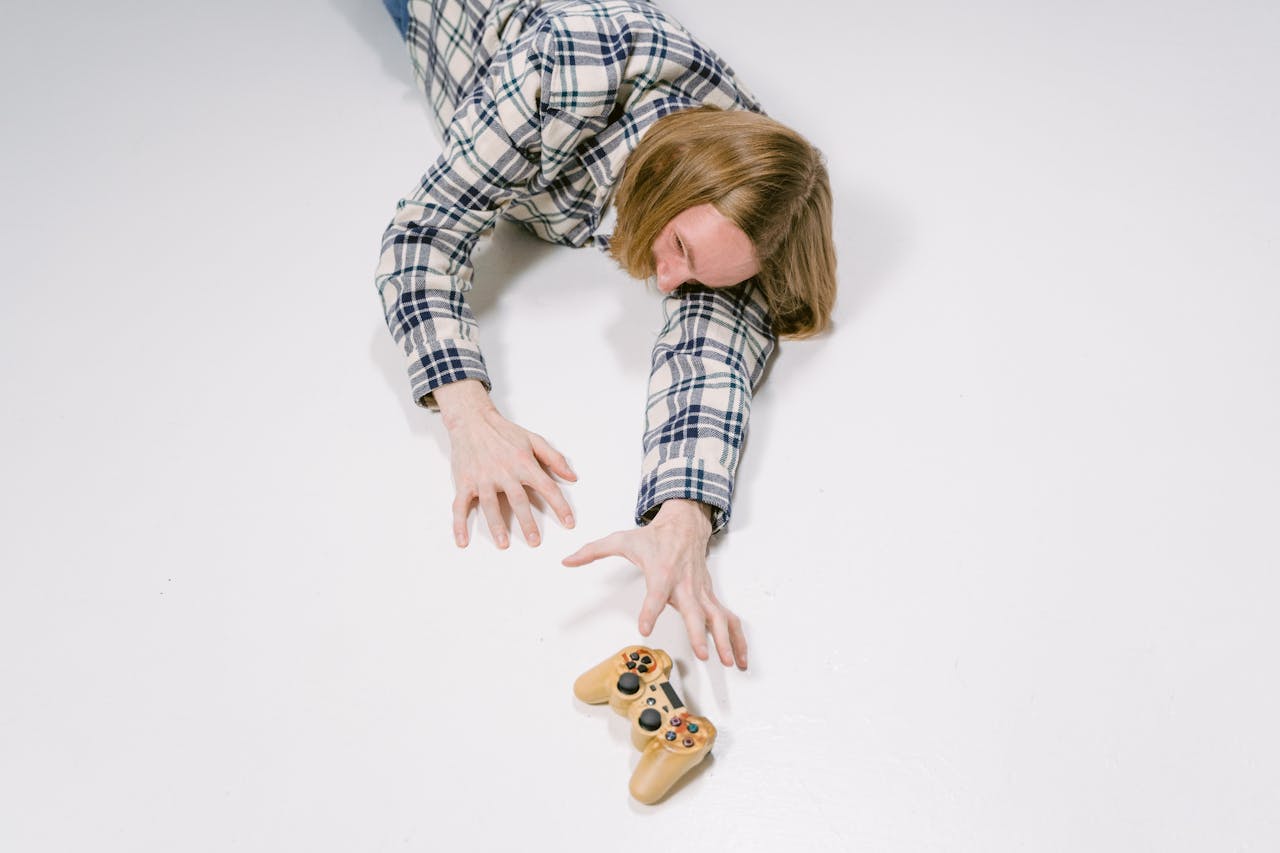
Gaming disorder occurs when gaming becomes a compulsive escape mechanism that impairs daily functioning, relationships, and responsibilities, but cognitive behavioral therapy and professional therapeutic support provide effective treatment for developing healthier coping strategies and restoring life balance.
What if the amount of time you spend gaming matters less than why you can't stop? Gaming disorder isn't about playing for hours - it's about losing control, shifting priorities, and continuing despite real consequences to your health and relationships.
What is gaming disorder? Understanding the official definitions
Gaming disorder isn’t just about spending a lot of time playing video games. It’s a recognized mental health condition with specific diagnostic criteria that distinguish it from enthusiastic but healthy gaming habits.
How the WHO defines gaming disorder
The World Health Organization officially recognized gaming disorder in ICD-11 in 2019, marking a significant shift in how the medical community views problematic gaming. According to the WHO, gaming disorder involves a pattern of persistent or recurrent gaming behavior characterized by three core features: impaired control over gaming (such as difficulty limiting when you start, how often, or how long you play), increasing priority given to gaming to the extent that it takes precedence over other life interests and daily activities, and continuation or escalation of gaming despite the occurrence of negative consequences.
For a diagnosis, these symptoms must persist for at least 12 months, though the duration may be shortened if symptoms are severe and all diagnostic requirements are met. The behavior pattern must also result in significant impairment in personal, family, social, educational, occupational, or other important areas of functioning.
The American Psychiatric Association’s approach
The American Psychiatric Association takes a slightly different approach in the DSM-5-TR. Internet Gaming Disorder is included as a condition requiring further study rather than a formal diagnosis, reflecting ongoing research in this area. The DSM-5-TR proposes nine criteria, including preoccupation with gaming, withdrawal symptoms when gaming is taken away, tolerance (needing to spend increasing amounts of time gaming), unsuccessful attempts to control participation, loss of interest in previous hobbies, continued excessive use despite knowledge of psychosocial problems, deceiving others about gaming time, using gaming to escape negative moods, and jeopardizing relationships or opportunities because of gaming. Meeting five or more of these criteria may indicate the disorder.
Why official recognition matters
Having gaming disorder recognized in major diagnostic frameworks creates tangible benefits for people who need help. Official classification enables insurance coverage for treatment, allows clinicians to develop specialized treatment protocols based on research, and reduces stigma around seeking help for gaming-related problems. When a condition has a formal diagnostic code, it signals to healthcare systems, families, and individuals that this is a legitimate concern deserving of professional support, not a character flaw or lack of willpower.
The escape spectrum: When gaming stops being healthy
Not all gaming is created equal. You might play for two hours after work and feel refreshed, while someone else plays the same amount and feels trapped. The difference isn’t always about time spent. It’s about why you’re playing, what you’re avoiding, and what it costs you.
Think of gaming behaviors as existing on a spectrum rather than fitting into neat categories. Research on behavioral addictions supports this continuum approach. Most people move along this spectrum depending on what’s happening in their lives. A stressful semester, a breakup, or even an exciting new game release can shift where you land. Understanding these stages helps you recognize when your relationship with gaming might be changing.
Stages 1 and 2: Healthy gaming territory
Stage 1: Healthy decompression looks like gaming with intention. You’ve finished your work, replied to important messages, and now you’re choosing to unwind with a game. When your partner asks if you want to grab dinner or a friend calls, you can pause without irritation. Gaming enhances your mood, but you don’t need it to feel okay. You might play daily or weekly, but it fits into your life rather than consuming it.
Stage 2: Preferential recreation means gaming has become your go-to hobby. You’d usually rather game than watch TV or scroll social media, and you might occasionally skip a social event for a raid or tournament. You still show up for the people and responsibilities that matter. Your friends know you’re a gamer. Your work or school performance hasn’t suffered. You maintain other interests, even if gaming tops the list.
At these stages, gaming serves you. It provides genuine relaxation, social connection, skill development, or creative expression. The key marker is flexibility: you can adjust your gaming when life requires it, even if you’d prefer not to.
Stage 3: The gray zone of targeted avoidance
This is where things get murky. You’re not just gaming because it’s fun anymore. You’re gaming because you don’t want to feel something or face something specific. That difficult conversation with your roommate? You’ll deal with it after this match. The anxiety about your upcoming presentation? It quiets down when you’re focused on your quest objectives.
At Stage 3, you start using gaming strategically to manage uncomfortable emotions or avoid specific tasks. You might notice your sleep schedule slipping when you’re stressed. Maybe you’ve missed a few deadlines or showed up late because you lost track of time. Your productivity dips intermittently, usually correlating with life stressors.
The distinguishing feature here is awareness paired with justification. You know you’re avoiding something, but it feels manageable. You tell yourself you’ll handle it tomorrow, after you decompress. Sometimes you do. Sometimes tomorrow becomes next week. People in this stage often function well enough that others don’t notice the pattern, but you feel the internal tension between what you’re doing and what you know you should be doing.
Stages 4 and 5: When gaming becomes problematic escape
Stage 4: Primary coping mechanism represents a fundamental shift. Gaming isn’t one tool among many for handling stress anymore. It’s become your main strategy for dealing with anxiety, depression, loneliness, or anger. When you can’t game, you feel genuinely distressed. You might experience irritability, restlessness, or preoccupation with getting back online.
Relationships start showing visible strain. Your family comments on how much you’re gaming. Friends stop inviting you places because you always decline. You might maintain your job or classes, but just barely. The quality of your work has declined, even if you’re meeting minimum requirements.
Stage 5: Life replacement is the far end of the spectrum where the virtual world genuinely feels more important or real than your physical life. You might skip meals, neglect hygiene, or ignore health problems because they interrupt gaming time. Relationships have deteriorated significantly or ended. You’ve faced serious consequences at work, school, or home, yet you continue gaming at the same intensity.
What makes Stage 5 particularly difficult is the paradox many people experience: you want to stop or cut back, but you can’t seem to do it. The thought of not gaming creates overwhelming anxiety or emptiness. Your offline life may have deteriorated so much that the game genuinely is the only place where you feel competent, connected, or valued.
Movement between these stages isn’t always linear. Life transitions, mental health changes, and even game design elements can pull you backward on the spectrum. Recognizing where you are right now matters more than judging yourself for not being where you think you should be.
Signs and symptoms of gaming disorder
Recognizing gaming disorder requires looking beyond just how many hours someone spends playing. The World Health Organization identifies three core clinical criteria that distinguish problematic gaming from enthusiastic play, each reflecting a distinct pattern of behavior that persists over time.
Impaired control over gaming
The first hallmark is severely reduced control over gaming, where you find yourself unable to limit when, how long, or how intensely you play despite genuinely wanting to cut back. You might tell yourself you’ll play for just one hour, then look up to find four hours have passed. You plan to skip a gaming session but feel unable to resist logging in. This isn’t occasional overindulgence; it’s a consistent pattern where your intentions and actions no longer align.
Increasing priority given to gaming
Gaming gradually takes precedence over activities that once mattered to you. Hobbies you enjoyed sit abandoned, you cancel plans with friends to play instead, or you rush through family dinners to get back to your screen. Work or school performance declines because gaming occupies your thoughts even when you’re not playing. The shift happens gradually, making it easy to rationalize each small compromise until gaming dominates your daily routine.
Continuation or escalation despite negative consequences
Perhaps the most telling sign is continuing to game at the same or increased levels even after experiencing clear harm. Your partner expresses concern about your absence from the relationship, your grades drop, you lose a job opportunity, or your physical health deteriorates, yet you keep playing. You might acknowledge these consequences but feel unable or unwilling to make meaningful changes.
Additional warning signs
Beyond the core criteria, gaming disorder often appears alongside physical symptoms like chronic sleep deprivation, neglected hygiene, carpal tunnel syndrome, back pain, eye strain, or significant weight changes from irregular eating. Emotionally, you might experience intense irritability or anxiety when unable to play, obsessive thoughts about in-game events, or a reliance on gaming to escape negative feelings rather than addressing them. People experiencing social anxiety may find gaming particularly appealing as a way to avoid uncomfortable real-world interactions, which can accelerate social withdrawal.
Social warning signs include declining real-world relationships, preferring online interactions exclusively, lying to family or friends about how much you play, or feeling that online connections are more authentic than in-person ones.
The 12-month duration requirement
For a clinical diagnosis of gaming disorder, these patterns typically need to persist for at least 12 months. This duration requirement helps distinguish between temporary periods of intense gaming and truly problematic patterns that resist change. That said, if symptoms are severe and all diagnostic criteria are present, clinicians may consider a diagnosis in a shorter timeframe.
Healthy gaming vs. problematic gaming: Key differences
The line between healthy gaming and gaming disorder isn’t about how many hours you spend with a controller in your hands. It’s about what gaming does to your life and how you feel about it. A person who plays four focused hours on a Saturday afternoon might have a healthier relationship with gaming than someone who squeezes in compulsive 30-minute sessions throughout the day.
Healthy gaming enhances your life. It’s something you choose to do because it brings you joy, relaxation, or connection. Problematic gaming replaces life, becoming the primary way you spend time at the expense of responsibilities, relationships, and activities you used to enjoy.
One of the clearest distinctions shows up when something interrupts your gaming. If you can pause mid-session to answer a friend’s call or help with dinner without feeling distressed, that’s a good sign. People experiencing problematic gaming patterns often respond to interruptions with intense anxiety, anger, or irritability. The inability to stop, even when you want to, signals that gaming has shifted from choice to compulsion.
Pay attention to what happens to your other interests. Healthy gamers maintain diverse hobbies and social activities: they might play guitar, go hiking, or meet friends for coffee. Gaming is one interest among many. When gaming becomes problematic, other hobbies gradually disappear. The person who used to paint or play basketball stops doing those things entirely.
The emotional landscape before and after gaming matters too. Ask yourself: are you gaming to celebrate, unwind after a productive day, or connect with friends? Or are you gaming to escape uncomfortable feelings, avoid responsibilities, or fill a void? Healthy gamers typically feel refreshed or entertained after a session. People with problematic patterns often experience guilt, shame, or emptiness after gaming, yet feel compelled to return.
Social connection offers another important marker. Gaming can be genuinely social, whether you’re coordinating strategies with teammates or sharing laughs over voice chat. The key question is whether gaming supplements your in-person relationships or has replaced them entirely.
The 7-Day Self-Assessment Protocol
Abstract symptoms become clearer when you track them in real time. A structured week of honest observation can reveal patterns you might miss when you’re in the middle of your daily routine. This protocol gives you specific metrics to monitor and a framework for understanding what they mean.
What to track daily
Start by recording your total hours played each day, but don’t stop there. Before you start gaming, rate your emotional state on a scale of 1 to 10, with 1 being terrible and 10 being excellent. Do the same immediately after you finish playing. This before-and-after snapshot reveals whether gaming genuinely improves your mood or just temporarily distracts you from uncomfortable feelings.
Next, list any responsibilities you delayed, skipped, or rushed through because of gaming. These might include work tasks, household chores, exercise, meal preparation, or time with friends and family. Rate your sleep quality that night on the same 1-to-10 scale, and count how many real-world social interactions you had that day, whether in person, by phone, or through video calls.
Track three additional factors that often signal problematic patterns. Note how many times you felt strong urges to game when you couldn’t, and rate the intensity of those urges from 1 to 10. Record any instances where you lied about or minimized your gaming to others. Finally, write down any moments when you tried to limit your play time but couldn’t stick to your plan.
Scoring your results
At the end of the week, calculate your score using this weighted system:
- 1 point for each day you gamed more than 3 hours
- 2 points for each day where responsibilities were significantly impacted
- 2 points for each instance of deception about your gaming
- 1 point for each day where your emotional state dropped by 2 or more points after gaming compared to before
- 1 point for each day with fewer than two real-world social interactions
- 2 points for each failed attempt to limit your play time
- 1 point for each day where sleep quality was rated 5 or below
- 1 point for each day where you experienced intense gaming urges (rated 7 or above) when unable to play
Responsibilities and deception carry more weight than simple hours played. Time spent gaming matters less than the impact on your functioning and your relationship with honesty. You might also consider taking a broader addiction assessment to explore patterns beyond gaming specifically.
Interpreting your gaming pattern
A score between 0 and 7 suggests a healthy relationship with gaming. You’re likely using games as one form of recreation among many, and they’re not interfering with your responsibilities or well-being. Continue monitoring occasionally to ensure patterns don’t shift.
Scores from 8 to 14 indicate that monitoring is recommended. Your gaming habits show some warning signs, even if they haven’t reached crisis levels. Pay attention to which metrics contributed most to your score. If deception or impacted responsibilities drove the number up, those deserve particular focus. Consider reducing your gaming time and actively scheduling competing activities.
A score of 15 to 20 suggests that professional consultation is worthwhile. If your self-assessment suggests problematic patterns, you can start with a free assessment to explore support options with a licensed therapist at your own pace. These patterns typically don’t resolve through willpower alone, and early intervention prevents them from becoming more entrenched.